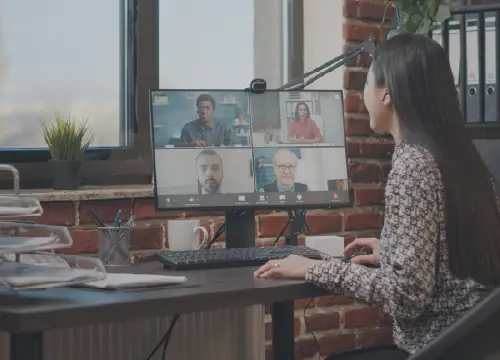
Remote Work Is a Reality, but Uncontrolled Access Is the Risk
Remote work has been part of the modern workforce for years. Improvements in connectivity and collaboration tools made distributed work possible long before it became widespread. During the pandemic, the remote workforce became a necessity for companies to continue business, and today it remains a permanent part of how many organizations operate.
For organizations in the Defense Industrial Base (DIB), this shift has raised important questions about CMMC compliance. Concerns about home offices, endpoints, and cloud-based collaboration continue to surface, often framed around whether remote work is allowed under CMMC 2.0.
The key point to remember is this: CMMC 2.0 compliance risk is not driven by employee location. The real risk is unmanaged access to Controlled Unclassified Information (CUI). When remote devices are not properly controlled and are allowed to access systems that handle CUI, those devices can become part of the compliance scope. This increases risk, not because employees are remote, but because access to sensitive information is not clearly governed. The challenge is to define, control, and govern access to CUI clearly, no matter where work happens.
Why Remote Work Has Become a CMMC Flashpoint
Managing a remote workforce under CMMC controls is not a simple task. Distributed work environments naturally increase complexity. Laptops and devices that are outside traditional office networks add more variation to how systems are accessed and create potential weak spots and security risks.
Remote work also increases the number of access paths to sensitive data. VPNs, cloud platforms, remote desktops, and web-based tools create multiple ways to reach the same information. At the same time, remote teams often rely on a number of collaboration tools, such as file-sharing platforms and messaging applications. Without clear guardrails, this can increase the risk of ad hoc or unauthorized tool use.
This challenge around managing remote access to CUI is gaining increased attention because CMMC Level 2 requirements are now appearing in active solicitations. Consequently, organizations are facing increased scrutiny regarding how and where they access CUI. Informal remote practices that once went unnoticed may now raise questions during assessments or contract reviews.
The core concern is not remote work itself. It is the potential loss of visibility, consistency, and control. Unmanaged access creates compliance risk regardless of location.
What CMMC Expects, Regardless of Where Work Happens
CMMC requirements do not depend on location. Whether employees work on-site, remotely, or in a hybrid model, the same expectations apply. At a principle level, the government expects organizations to demonstrate:
- Controlled access to CUI – Access to CUI must be limited to authorized users and systems, while also being aligned with job responsibilities.
- Verified user identity – Organizations must be confident that users accessing systems and data are who they claim to be, using strong authentication methods.
- Secure transmission and storage – CUI must be protected both when it is stored and when it is transmitted, regardless of environment.
- Accountability and traceability – Organizations must be able to track access to CUI through clear logging and auditability.
CMMC 2.0 compliance is not about memorizing controls and getting that initial certification. It is about consistently enforcing these outcomes over time.
Where Remote Work Commonly Breaks Down Under CMMC
Remote work introduces several areas where compliance can begin to slip if guardrails are unclear. Common challenges include:
- Use of personal or unmanaged devices in CMMC-related workflows
- Employees relying on consumer-grade file sharing or email for convenience
- Inconsistent access rules across teams and tools
- Difficulty maintaining clear audit trails across distributed environments
- Accidental scope expansion caused by unmanaged tools rather than bad intent
Without clear boundaries and oversight, these issues can undermine compliance efforts.
Remote Work and Unintentional Scope Expansion
Understanding your company’s scope is foundational to any CMMC 2.0 journey. Before certification, organizations carefully identify which systems, users, and processes interact with CUI. This defines what must meet CMMC requirements and what falls outside those boundaries.
Importantly, scope defines where CUI lives and who can access it. Anything that stores, processes, or transmits CUI inherits compliance obligations. Scope reflects the real boundaries of sensitive work, not just documentation.
After certification, scope does not remain static. As remote or hybrid work evolves, new tools, devices, and access paths can quietly pull additional elements into scope. The team might adopt new collaboration platforms. Personal or unmanaged devices may access systems that handle CUI. Contractors or third-party users might be granted access without knowing the full compliance impact.
Most scope expansion is accidental. It happens when boundaries are unclear or enforcement fades over time. Left unmanaged, small changes can increase how complex everything related to CMMC is, expand audit scope, and raise the cost of maintaining compliance.
For this reason, scope management should be treated as a strategic decision, not a technical afterthought.
Designing Remote Workflows That Protect CUI by Default
Supporting remote work under CMMC 2.0 requires a shift in mindset. Instead of trying to “secure everything,” organizations should focus on designing intentional access.
Key principles include:
- Least privilege access – Users should have access only to what they need to perform their role. Limiting access reduces risk and simplifies compliance as teams change.
- Approved environments for sensitive work – CUI should be accessed and handled only within environments designed and approved for regulated data.
- Clear separation between personal and regulated workflows – Personal devices and tools should not be used for regulated work unless they meet compliance requirements.
By clearly defining where sensitive work can occur and how they handle outside devices, centralized environments help simplify security and oversight.
Why Secure Collaboration Matters More in a Distributed Workforce
Remote teams still need to collaborate on sensitive information. Without clear parameters, collaboration can quickly introduce compliance gaps.
Secure collaboration supports centralized access to CUI, consistent enforcement of access controls, reduced reliance on unmanaged endpoints, and clearer visibility into user activity. When organizations treat collaboration as a governance issue, not just a productivity tool, they are better positioned to protect CUI and limit scope expansion.
How Exostar Supports CMMC-Aligned Remote Collaboration
Exostar supports the Defense Industrial Base by providing secure environments designed for regulated collaboration. As organizations adopt remote and hybrid work models, Exostar helps establish clearer boundaries around where sensitive work can take place.
The Exostar CMMC Ready Suite supports several remote collaboration challenges, including:
- Secure collaboration and file sharing – Supporting collaboration within environments designed for regulated data.
- Controlled access to regulated data – Centralizing access to support consistent access practices and visibility.
- Centralized environments that reduce scope creep – Reducing reliance on unmanaged endpoints and ad hoc tools.
- Support for documentation and assessment readiness – Helping keep SSPs and related artifacts aligned with real-world operations.
Exostar enables compliance efforts but does not replace organizational responsibility. Governance, policy decisions, and compliance ownership remain with the organization. Exostar provides the environment and supporting capabilities that make CMMC-aligned remote collaboration more achievable over time.
Remote Work and CMMC Can Coexist with Intentional Design
Remote and hybrid work are not incompatible with CMMC. The real risk comes from unmanaged access to sensitive information, not employee location. When collaboration, access, and boundaries are intentionally designed, organizations can support a distributed workforce while maintaining compliance.
Exostar supports organizations navigating CMMC requirements in evolving work environments by helping establish controlled approaches to secure collaboration and access to CUI.